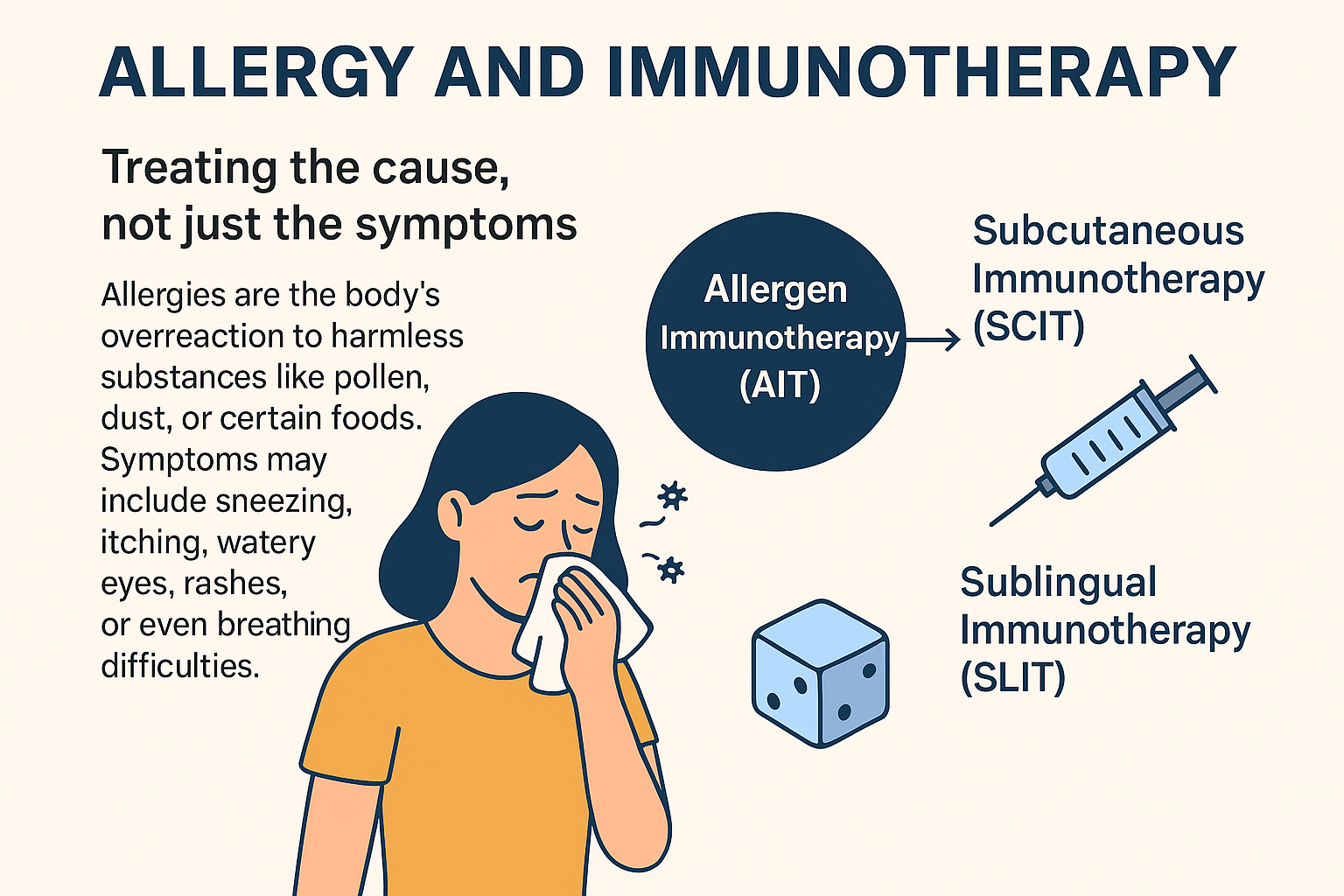
Allergy and Immunotherapy: Treating the Cause, Not Just the Symptoms
Allergies are the body’s overreaction to harmless substances like pollen, dust, or certain foods. Symptoms may include sneezing, itching, watery eyes, rashes, or even breathing difficulties. With increasing pollution and lifestyle changes, the number of people affected by allergies is rising rapidly — especially in India, where nearly 30–40% of people suffer from respiratory allergies.
While most treatments like antihistamines or nasal sprays only give temporary relief, Allergen Immunotherapy (AIT) targets the root cause. It works by gradually exposing the body to small doses of the allergen, helping the immune system build tolerance over time.
There are two main forms of immunotherapy:
💉 Subcutaneous Immunotherapy (SCIT): Allergy shots given under the skin.
💧 Sublingual Immunotherapy (SLIT): Allergen drops or tablets placed under the tongue.
Over a few years, this therapy can significantly reduce symptoms, medication dependence, and even prevent new allergies from developing. It is especially beneficial for allergic rhinitis, asthma, and insect sting allergies.
However, despite its proven effectiveness, immunotherapy remains underused due to limited awareness and trained specialists. Expanding medical education and structured training in allergy and immunotherapy can bridge this gap and bring long-term relief to millions.
Comments (0)

Categories
Recent posts
Understanding Allergy and the Power of ...
28 Oct 2025
The Silent Threat: Understanding the ...
28 Oct 2025