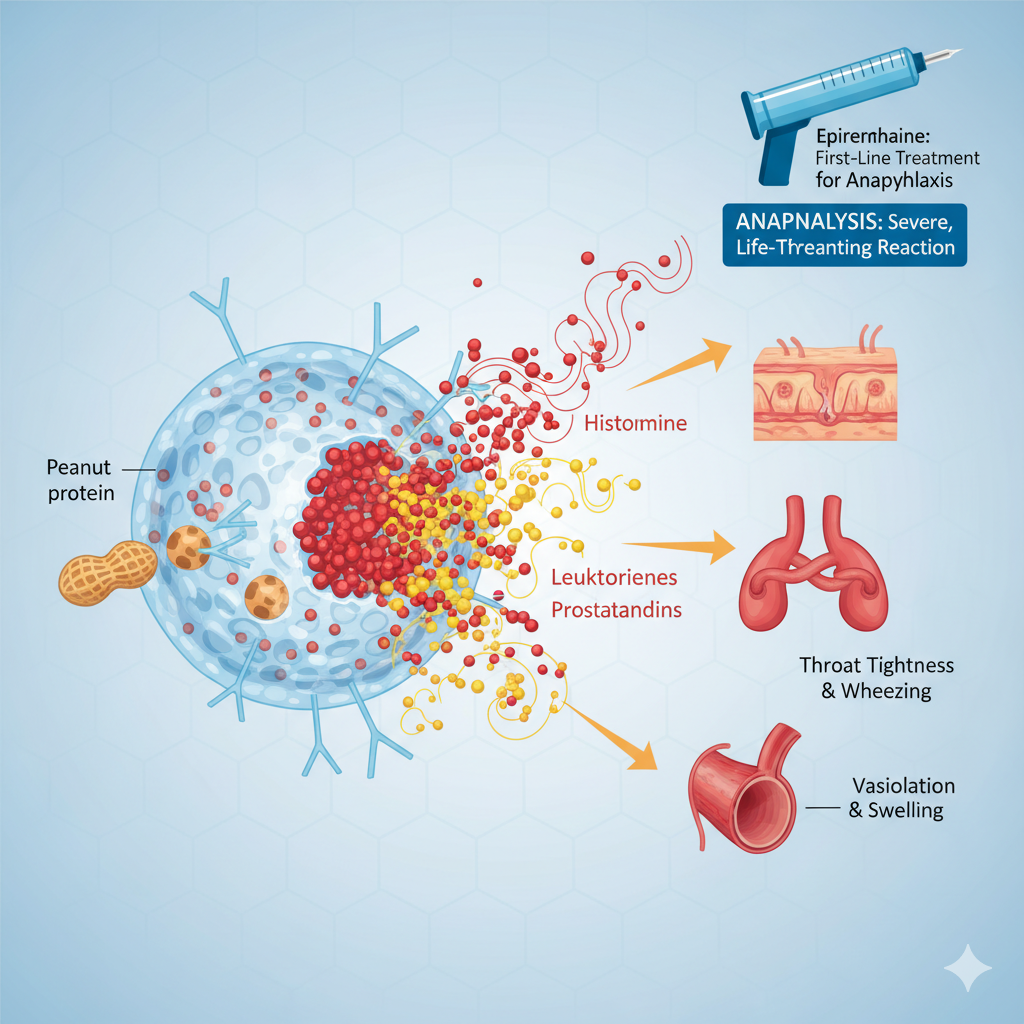
The Immune System's Overreaction
At its core, a food allergy is a case of immune system mistaken identity. When a susceptible person ingests a specific food protein (the allergen), their body registers it as a threat.
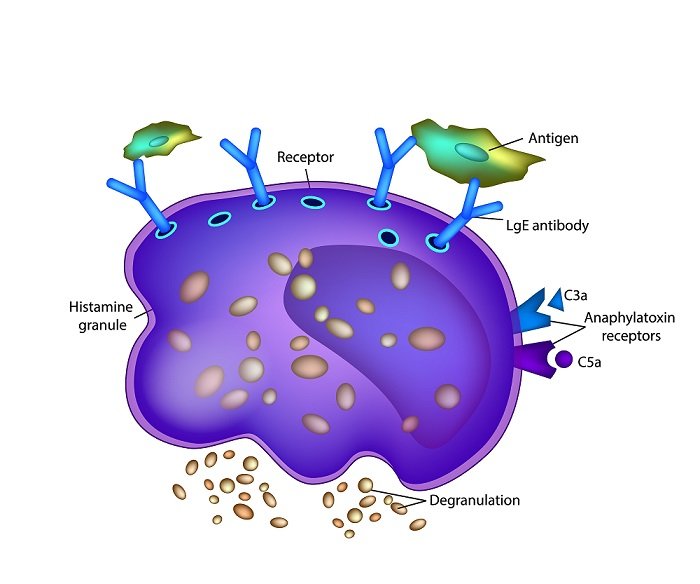
Sensitization: Similar to environmental allergies, the first exposure prompts the immune system to produce large amounts of the antibody Immunoglobulin specific to that food protein. These $\text{IgE}$ antibodies attach to mast cells (in tissues) and basophils (in blood).
Reaction: Upon re-exposure, the food allergen binds to the $\text{IgE}$ on the mast cells, triggering a process called degranulation. This rapidly releases potent chemicals, including histamine, leukotrienes, and prostaglandins.
Systemic Effects: These chemicals cause the immediate, widespread symptoms that define an allergic reaction, affecting multiple organ systems simultaneously.
Comments (0)
.jpg)
Categories
Recent posts
Understanding Allergy and the Power of ...
28 Oct 2025
The Silent Threat: Understanding the ...
28 Oct 2025